Sources for Parents
Today’s story is the opening of Ein Yaakov on Berachos: the first Mishnah of Shas and the story of Rabban Gamliel’s sons. Here is everything we drew from, so you can learn it with your children.
- Ein Yaakov, Berachos ch. 1 (opening section): Hebrew text and the older English translation, read on Sefaria. The story itself.
- Mishnah Berachos 1:1: the three opinions, the story, and “to keep a person far from doing wrong.”
- Gemara Berachos 2a: kohanim eat terumah when the stars come out; why the Mishnah opens with night (“there was evening, and there was morning”).
- Rashi, Berachos 2a: the kohen who went to the mikveh and waited for sunset; the first “watch” is a third of the night; the Sages’ limit is so no one says “I still have time” and misses it (ד״ה כדי להרחיק).
- Bartenura, Mishnah Berachos 1:1: the sons had heard “until midnight”; no meal or sleep once the time has come (“אסור לסעוד וכל שכן לישון עד שיקרא”).
- Tosafos Yom Tov, Mishnah Berachos 1:1: the terumah was already prepared before them, “nothing missing except to eat.”
- Steinsaltz on Berachos 2a: the “beis hamishteh” was a wedding feast.
- Mei HaShiloach, vol. 2, Berachos 2a: why the sign for night Shema is the kohanim.
- The Rebbe, Toras Menachem vol. 27, p. 222: don’t wait for daylight; bring light into the night. We read this only in an English adaptation (Y. Brown, lubavitch.com, Aug. 2022), not the original sicha.
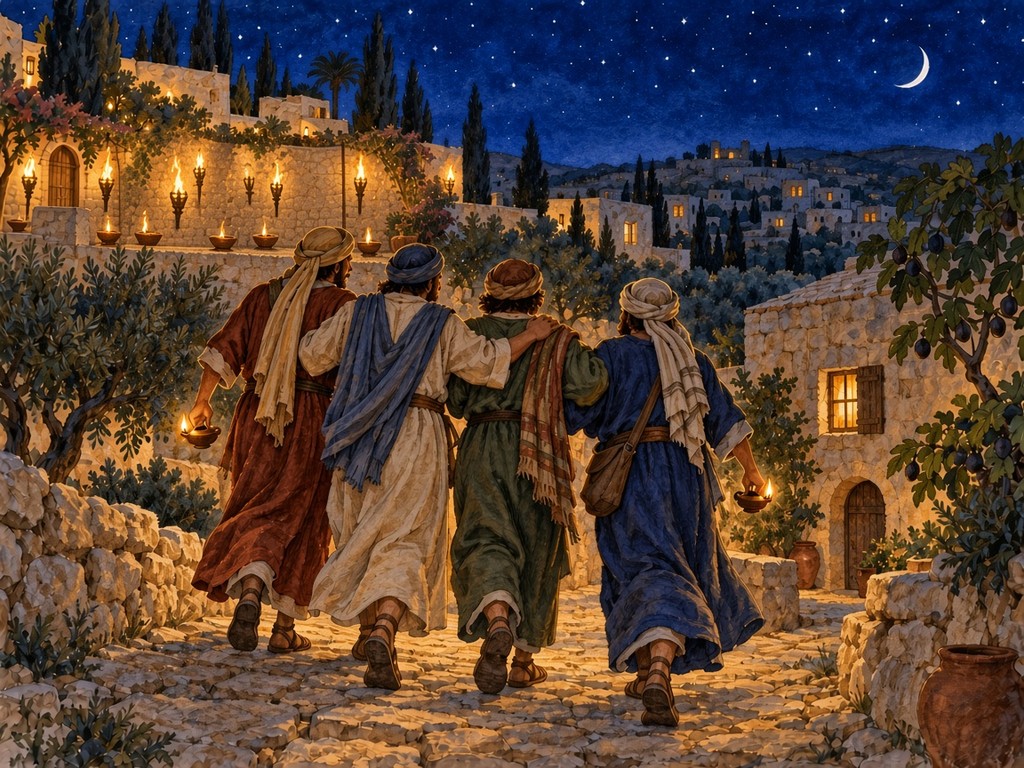
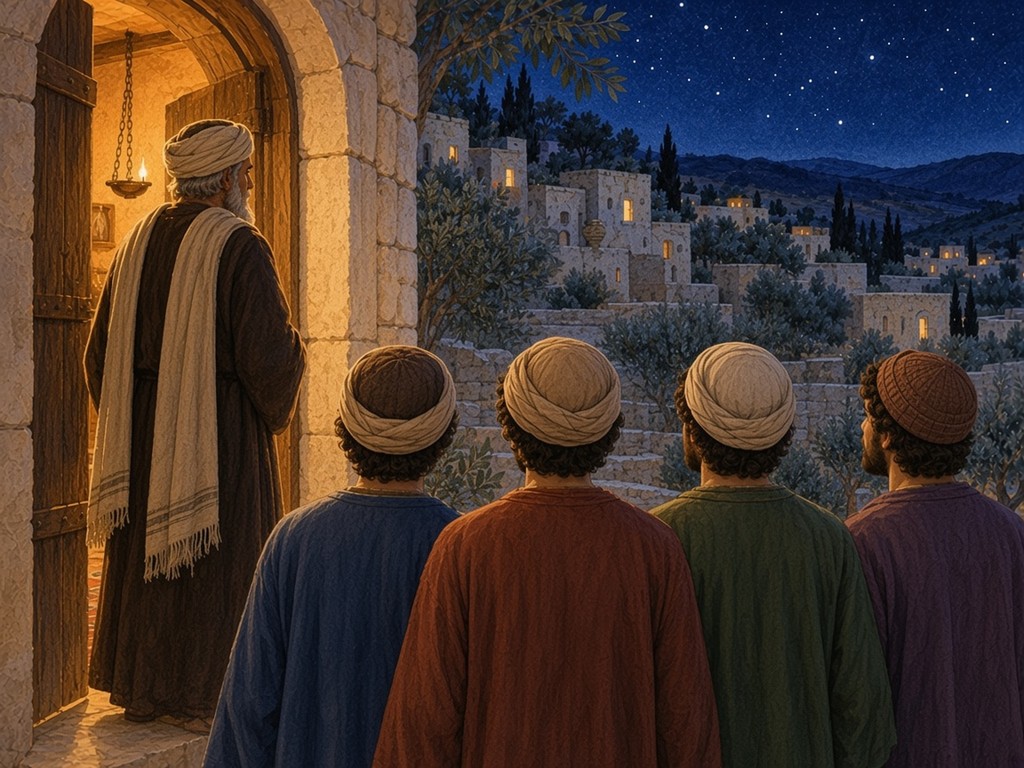
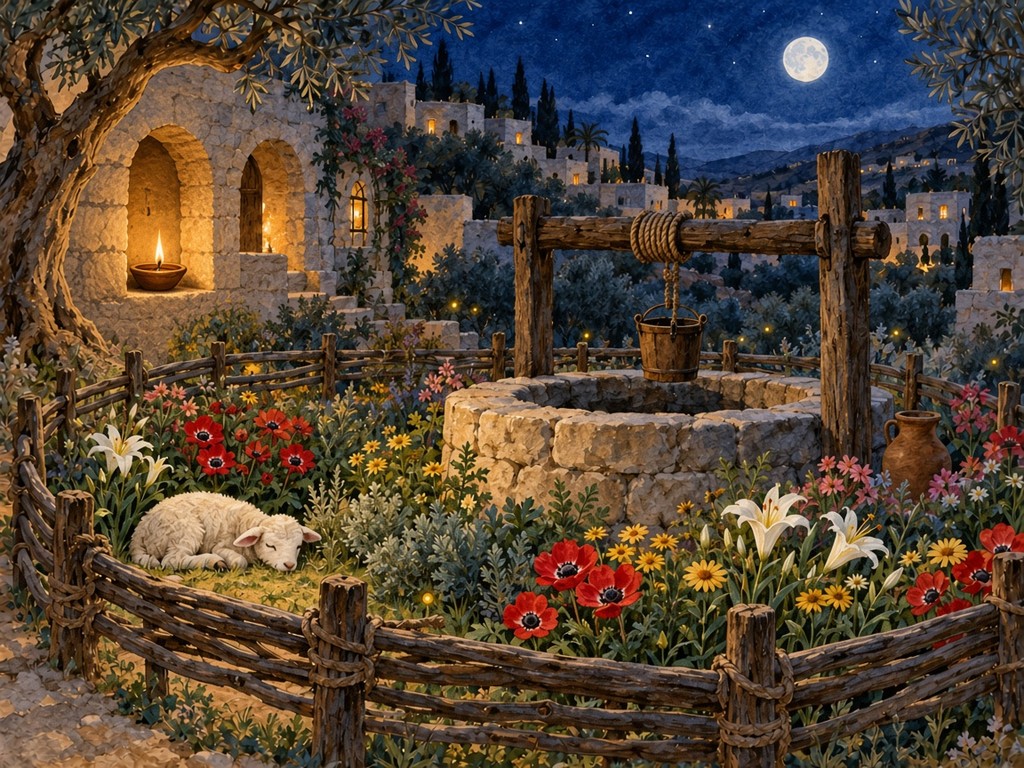
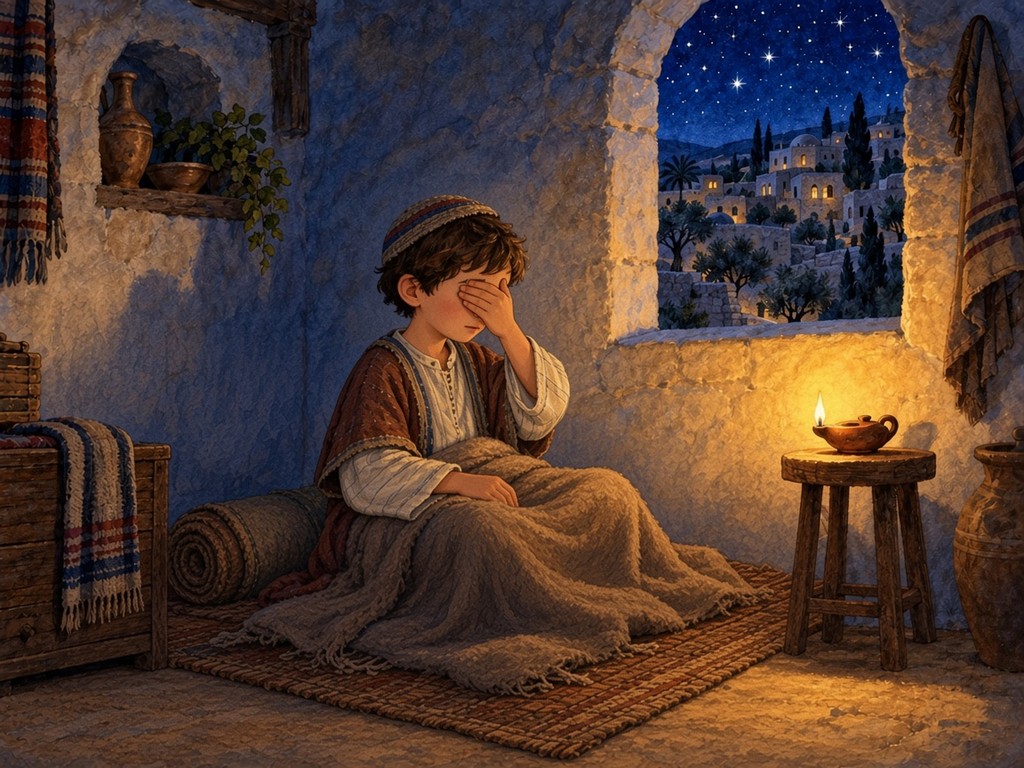
Ours, not from a source: the kids’ wording, the spoken lines (“Wait… we never said Shema!”, “Abba, is it too late?”), the brothers dancing at the wedding, the fence-around-a-well picture, the questions and tonight’s mission. Every painting is an imagined scene. Named Sages are shown only from behind.
Not used this time: Iyun Yaakov, Etz Yosef / Anaf Yosef and Maharsha weren’t available in the online library we used, so nothing here comes from them.